Electrosynthesis employs electrons as a powerful, controllable, and traceless alternative to chemical oxidants or reductants. It generally offers more sustainable options compared to conventional redox reactions and can sometimes achieve superior selectivity. Thermodynamics and kinetics at the solid-liquid interface can be enhanced, while electrochemistry also simplifies purification and post-treatment processes. Our approach particularly emphasizes understanding the synthesis of electroactive and photoactive polymers through electrochemical methods. The solid-phase electrosynthetic technique developed in our group enables real-time monitoring of molecular growth while producing complex compositions and sequences of monomers, coupling reactions, and ions within non-, d-π, and π-π* conjugated polymers. Recent updates on our group's research activities, focusing on solid-phase electrosynthesis, are available in our publications. A brief introduction to each example of recent projects is provided below.
Keywords: solid-phase electrosynthesis, iterative synthesis, sequence-controlled synthesis, precise synthesis, metallopolymer, polymer monolayer, end-on polymers, polymer brush, negative differential resistance effect, organic mixed ionic-electronic transport, memristor
(1) Solid-Phase Electrosynthesis (Electrochemical Iterative Synthesis, Precise Synthesis, Polymer Orientation)
We proposed the concept of solid-phase electrosynthesis, which simultaneously enables rapidly surface-initiated uniform electrosynthesis and unidirectional assembly of metallopolymers via kinetically accelerated and statistically allowed iterative growth.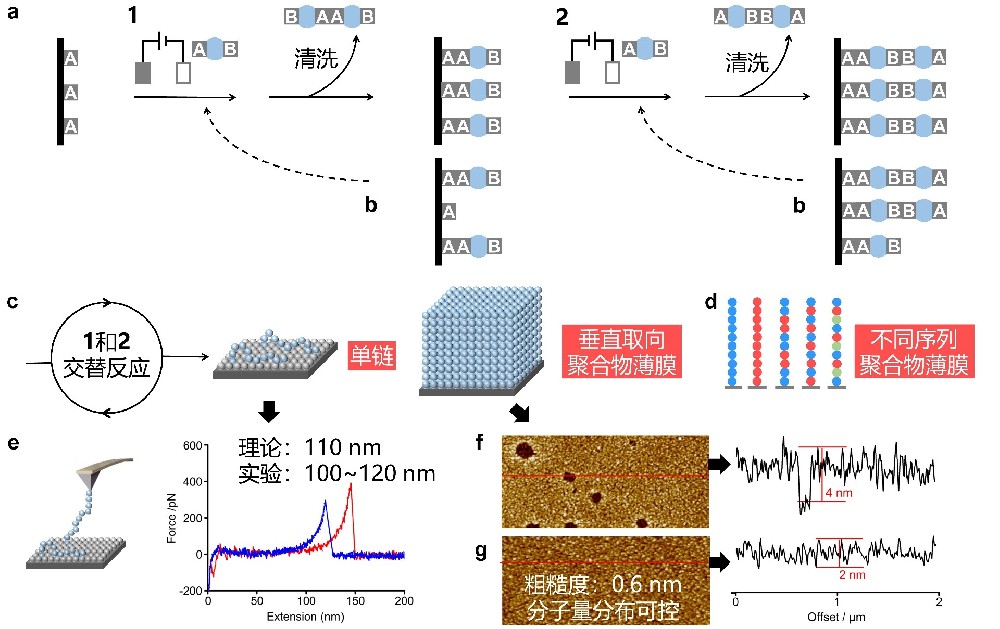
Fig. 1 Solid-phase electrosynthesis.
Acc. Chem. Res. 2023, 56, 3694.
(2) Vertically oriented conjugated metallopolymers as two-dimentional nanoarchitectures
Long-range ordered nanoarchitecture of polymers is hampered by kinetic and statistical restrictions during polymer synthesis and manipulation. We have reported the monolayer nanoarchitecture of long-range crystalline metallopolymers via kinetically accelerated and statistically allowed iterative growth, guided by a self-assembled monolayer with monitoring and defect-repair abilities.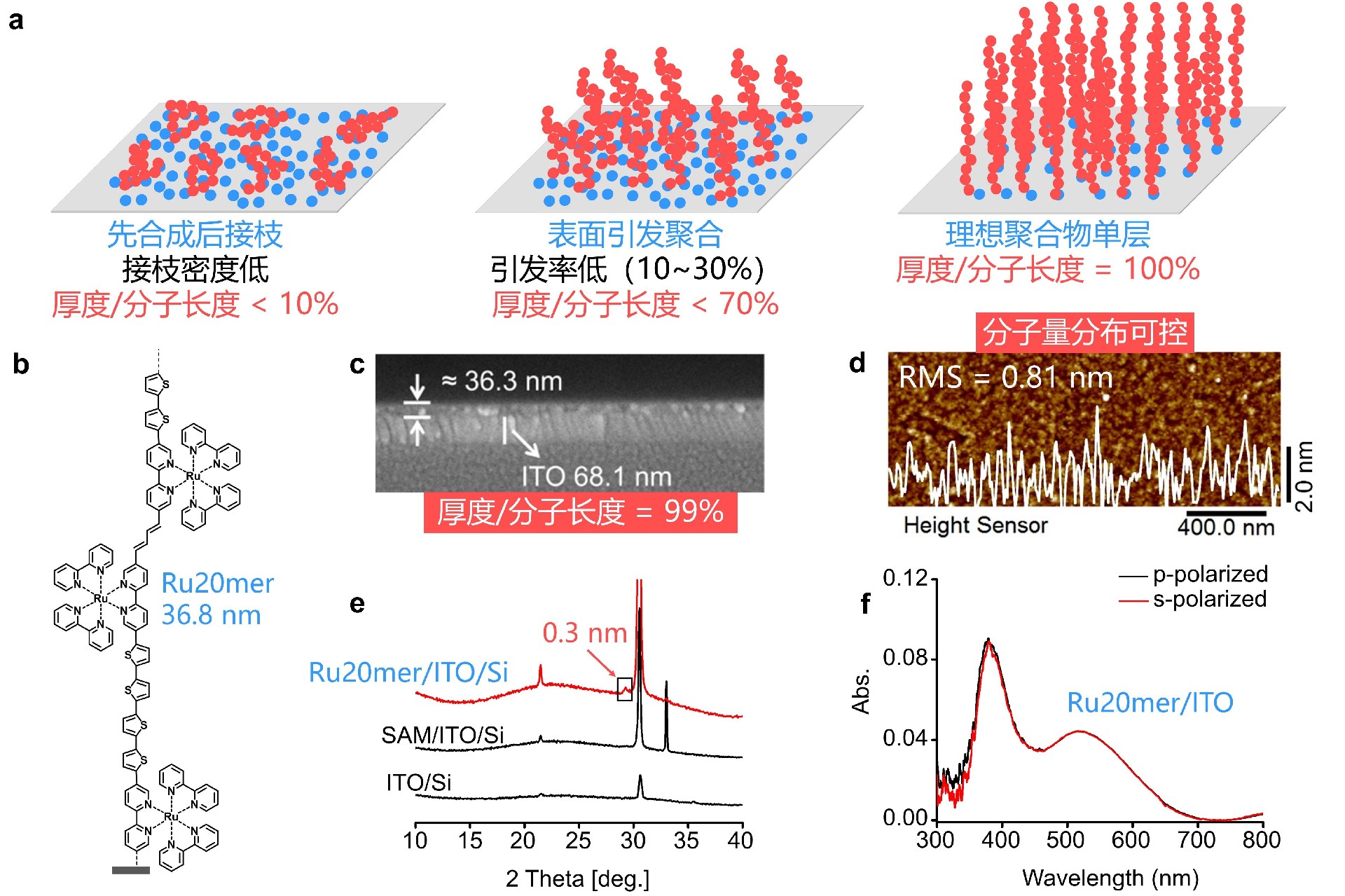
Fig. 2 Nanoarchitectonics on electrosynthesis and assembly of conjugated metallopolymers.
Angew. Chem. Int. Ed. 2023, 135, e202311778. hot paper
(3) Monomer and Ion Sequence-Controlled Conductance and Memristive Functions of Metallopolymer Monolayers
Understanding how charge travels through sequence-controlled molecules has been a formidable challenge due to simultaneous requirements in well-controlled synthesis and well-manipulated orientation. We reported electrically driven simultaneous synthesis and crystallization as a general strategy to study the conductance of composition and sequence-controlled unioligomer and unipolymer monolayers. Our work demonstrated a promising way to release an ultra-rich variety of electrical parameters and optimize the functions and performances of multilevel resistive devices.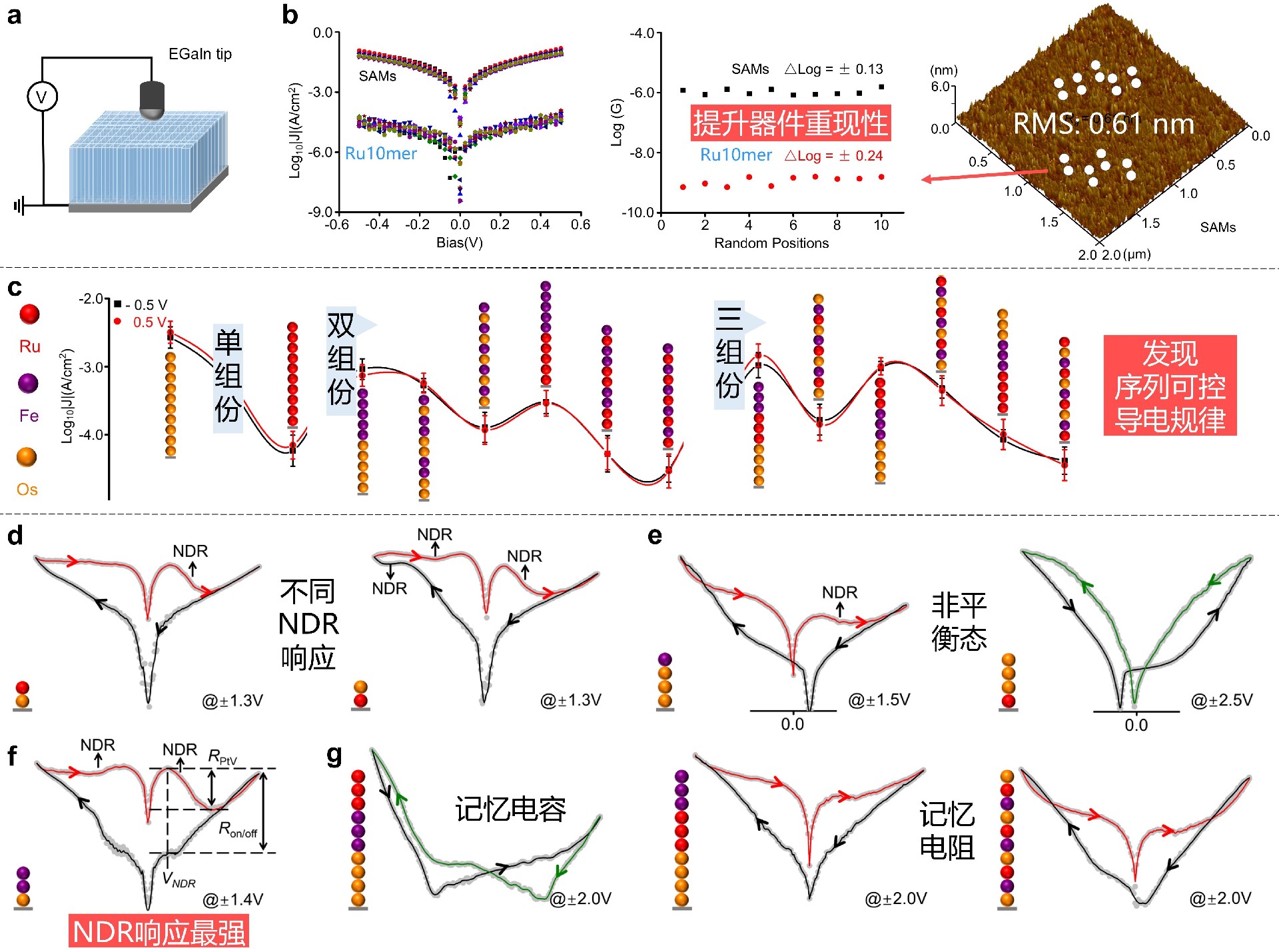
Fig. 3 Composition and sequence-controlled conductance of crystalline unimolecular monolayers.
Sci. Adv. 2023, 9, eadh0667.
Ion-precise polymer synthesis is challenging due to counterion exchange that occurs during synthesis, purification, characterization, and processing. Here, we demonstrate ion-precise electrosynthesis and memristors of polymers in which both the backbone cations and counter anions are sequence-controlled for the first time. This approach enables superior control over intrinsic negative differential resistance compared to other methods and materials.
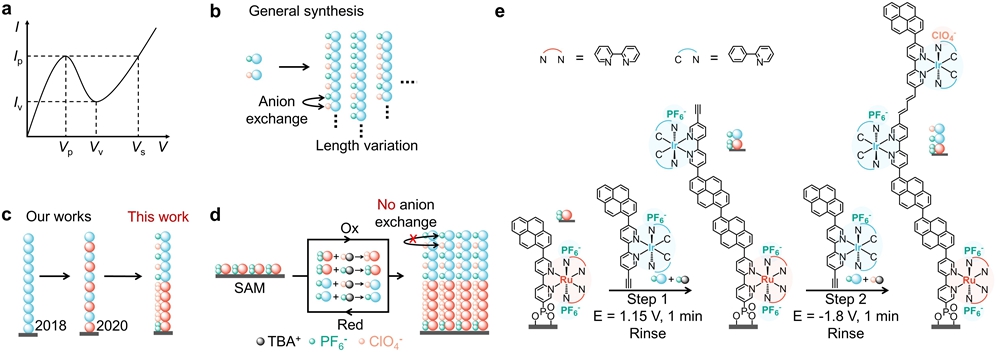
Fig. 4 Cation- and anion-sequence-controlled conjugated polymer monolayers for programming intrinsic NDRs.
Angew. Chem. Int. Ed. 2026, doi.org/10.1002/anie.8580241.